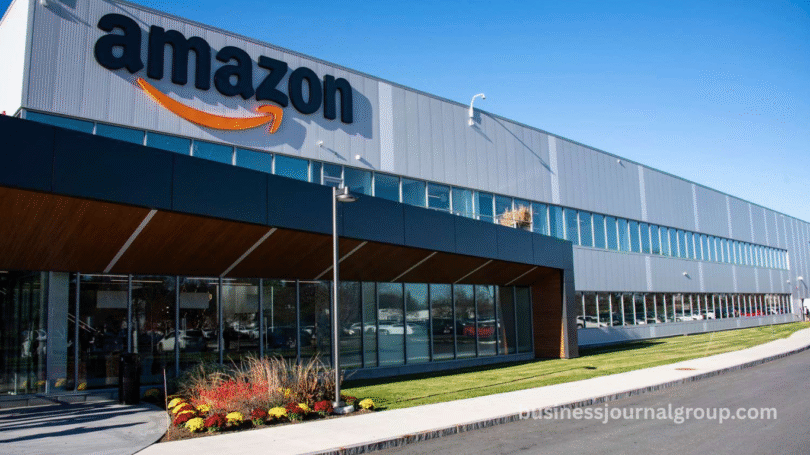

The race for artificial intelligence supremacy is heating up literally. With a massive surge in AI development forecasted for 2025, Amazon Web Services (AWS) is taking groundbreaking steps to address the critical issue of GPU cooling. As workloads intensify and GPUs become hotter and more power-hungry, maintaining optimal temperatures is key to unlocking their full potential.
Amazon, a key player in the cloud computing arena, has recognized the cooling bottleneck as a crucial hurdle in supporting next-gen AI models. In response, AWS is investing in innovative cooling technologies tailored specifically for Nvidia GPUs. These efforts are part of Amazon’s strategic vision to future-proof its cloud infrastructure.
The implications are far-reaching. From AI startups to research labs and enterprises, everyone relying on AWS for deep learning and inference tasks stands to benefit from this enhanced infrastructure.
The AI Boom and Its Demands on Infrastructure
Artificial intelligence has transitioned from experimentation to mission-critical deployment. Generative AI models, such as large language models and vision transformers, require immense computational resources. This trend has put immense pressure on data center hardware, particularly GPUs like those from Nvidia.
Nvidia’s GPUs, such as the H100 and upcoming Blackwell series, deliver unparalleled performance but also generate considerable heat. Without advanced cooling, performance can throttle, reducing efficiency and increasing downtime. AWS is stepping in with intelligent solutions that scale with demand.
Why Cooling Nvidia GPUs Is a Game Changer
Cooling is no longer an auxiliary concern it’s central to the success of AI operations. Nvidia GPUs are the powerhouse behind most deep learning models, and their efficiency is directly tied to temperature control. AWS’s move to boost Nvidia GPU cooling goes beyond operational improvements; it’s an enabler of future innovation.
Advanced cooling ensures sustained performance, extends GPU lifespan, and significantly lowers the risk of overheating-related failures. For AWS customers running AI inference 24/7, these benefits are invaluable.
Amazon’s Next-Gen Cooling Technologies Explained
To support the 2025 AI surge, AWS is deploying a suite of cooling solutions:
Liquid Cooling Systems
AWS is integrating direct-to-chip liquid cooling in select data centers. This method involves transferring heat via liquid coolant directly from the GPU surface to heat exchangers, allowing for faster and more efficient heat dissipation.
Immersion Cooling
In this futuristic approach, servers are submerged in non-conductive cooling fluids. This method is highly effective for managing extreme workloads and dense GPU clusters, particularly in hyperscale deployments.
AI-Optimized Thermal Management
Amazon is also leveraging its own AI algorithms to optimize thermal flows dynamically. These smart systems monitor temperature fluctuations in real time and adjust cooling mechanisms accordingly, improving energy efficiency without compromising performance.
Strategic Partnership Between Amazon and Nvidia
Amazon’s close relationship with Nvidia is foundational to this initiative. AWS continues to be among the first cloud providers to offer Nvidia’s latest GPU innovations. This collaboration ensures that both companies co-design hardware and software to maximize thermal and computational performance.
Their joint roadmap includes:
- Optimized infrastructure for the Nvidia Blackwell architecture
- Shared innovations in cooling hardware and AI-powered management tools
- Benchmarked results to set industry standards for GPU utilization and energy savings
Environmental Impact: Cooling Smarter, Not Harder
Traditional air cooling in data centers consumes massive energy. AWS’s updated cooling strategy not only boosts performance but also reduces environmental impact. Using liquid and immersion cooling cuts down on HVAC loads, slashing electricity consumption.
Read More: Samsung Z Flip 7 FE Price Slashed in 2025
Amazon’s goal to reach net-zero carbon emissions by 2040 aligns with these advancements. By cooling smarter, AWS reduces operational costs and contributes to global sustainability efforts without sacrificing computational power.
Benefits for AI Developers and Enterprises
AWS’s enhanced Nvidia GPU cooling isn’t just a back-end improvement—it directly benefits AI developers and enterprises:
- Increased Uptime: Better cooling means less hardware throttling or failure.
- Higher Throughput: GPUs operate at peak performance longer, handling more workloads.
- Cost Efficiency: Reduced energy costs and longer hardware lifespan improve ROI.
- Scalability: Enterprises can scale AI initiatives with confidence, knowing infrastructure will keep up.
This positions AWS as the go-to platform for serious AI development in 2025 and beyond.
The Competitive Landscape
While AWS leads the charge, other cloud providers like Microsoft Azure and Google Cloud are also investing in data center efficiency. However, Amazon’s holistic approach—integrating AI with thermal management and custom-designed cooling hardware—gives it a decisive edge.
This differentiation may be pivotal as enterprises select cloud partners for large-scale AI deployments. AWS’s combination of Nvidia GPUs, innovative cooling, and developer-friendly tools sets a new standard.
What to Expect in 2025 and Beyond
Looking ahead, AWS plans to expand its new cooling systems globally, making high-performance GPU clusters more accessible. As the demand for generative AI, robotics, and machine learning continues to rise, Amazon’s infrastructure will play a vital role in fueling the next wave of innovation.
Expect to see:
- Global rollout of liquid and immersion-cooled clusters
- More Nvidia GPU offerings with advanced thermal design
- AWS regions optimized for AI workloads and sustainable computing
Frequently Asked Questions
Why is Amazon Web Services upgrading its GPU cooling systems?
AWS is enhancing its cooling infrastructure to support the rising demand for AI workloads powered by Nvidia GPUs, ensuring better performance and sustainability.
What types of cooling technologies is AWS implementing?
Amazon is using liquid cooling, immersion cooling, and AI-driven thermal management to keep Nvidia GPUs at optimal temperatures.
How does this benefit AI developers?
Developers gain access to faster, more reliable GPU performance, allowing for quicker training and inference cycles with lower risk of thermal throttling.
Will the new cooling systems be available globally?
Yes, AWS plans to expand these systems across multiple regions to meet global AI infrastructure demands.
What Nvidia GPUs are supported by AWS’s upgraded cooling?
The focus is on high-performance models like the Nvidia H100 and the upcoming Blackwell architecture, optimized for AI and ML workloads.
How does AWS ensure energy efficiency in cooling?
Through advanced thermal designs, smart sensors, and reduced HVAC dependency, AWS lowers power usage while maintaining high GPU output.
Is this part of Amazon’s sustainability strategy?
Absolutely. These upgrades align with Amazon’s net-zero carbon commitment by improving energy efficiency and reducing emissions.
How does AWS compare to competitors in this area?
AWS stands out by integrating cutting-edge cooling with AI-driven infrastructure management, offering unmatched performance and sustainability.
Conclusion
Amazon Web Services is setting a new benchmark in AI infrastructure by boosting Nvidia GPU cooling technologies to power the 2025 AI surge. With advanced liquid, immersion, and AI-driven cooling systems, AWS ensures high performance, energy efficiency, and scalability for the next generation of AI workloads.