If you’ve watched NBA games recently, you’ve probably noticed something funny: layups don’t look like layups anymore. The simple, old-school off-the-glass finish is still around, but today’s players twist, hang, delay, switch hands, and improvise in ways that feel almost artistic. Sometimes you see a clip and think, “That should not be possible.” And as fans scroll through highlight reels or mixed content feeds – where basketball videos sit right next to unrelated things like funky time play – it becomes even clearer how creative the sport has become at the rim.
Finishing used to be about getting past a defender. Now it’s about solving a puzzle in midair.
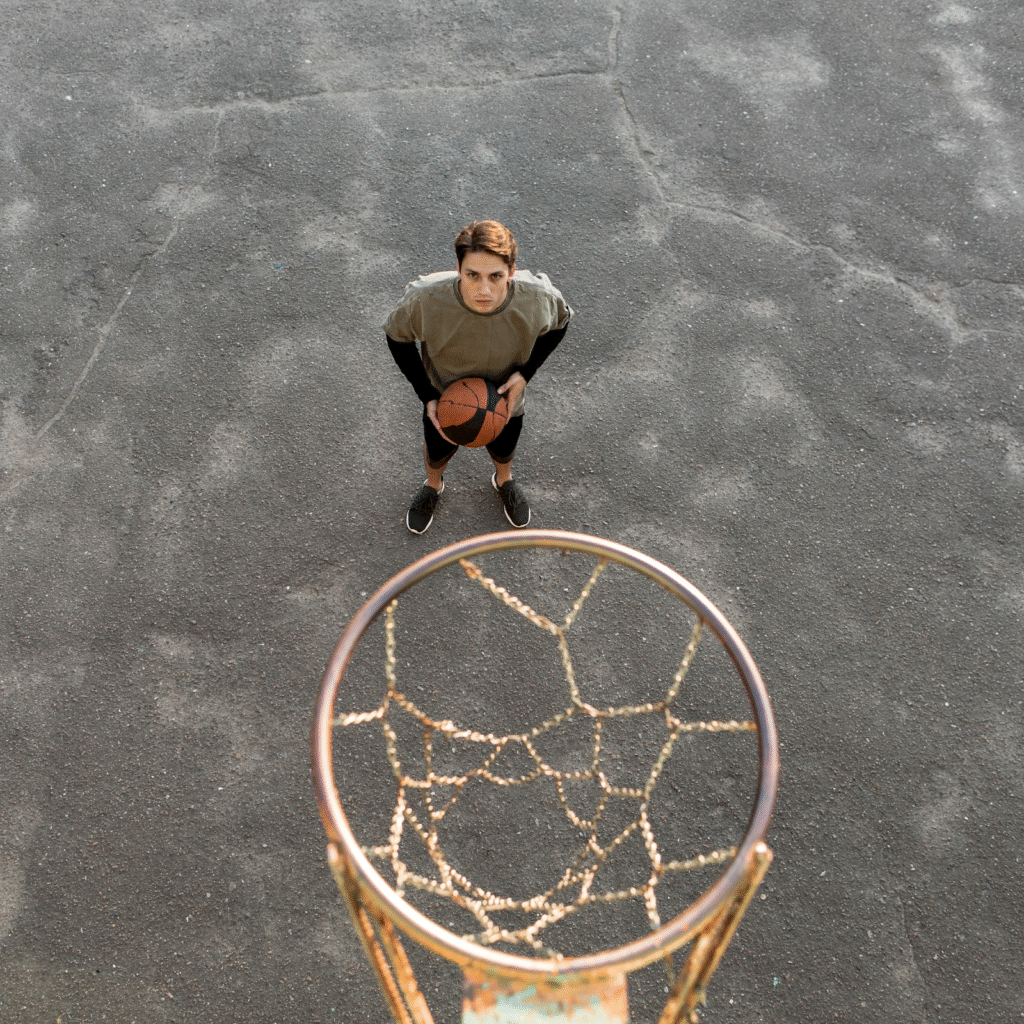
Why the modern game needed new layups
Today’s rim protectors are taller, quicker, and smarter than ever. They study tendencies, they read angles, and they erase predictable attempts. You can’t just jump straight at them anymore – you’ll get blocked or swallowed by contact.
Creative layups give offensive players tools that help them survive in a more crowded, more athletic paint.
Changing timing
A delayed release or double clutch forces shot-blockers to react twice. If they commit too early, the offense wins.
Changing angles
A reverse, an inside-hand scoop, or an exaggerated extension lets players use the rim as a shield or hide the ball behind their body.
Reducing the need for explosiveness
Finishing craft allows players who aren’t elite athletes to beat elite athletes. That’s a huge shift from older eras.
Simply put: creativity keeps pace with defensive evolution.
How players developed this new finishing style
It didn’t happen overnight. Modern finishing is a blend of different influences – streetball culture, European footwork, social media, and skill trainers who push players to experiment.
Streetball’s influence
Outdoor courts have always been full of unusual finishes – scoops, spins, high-arcing flips. Those ideas eventually seeped into the professional game.
European pacing
European guards popularized slower, more deliberate steps: hesitations, long strides, and odd angles that confuse defenders.
Skill trainers encouraging experimentation
A decade ago, “wrong-foot layups” or “off-hand floaters” were considered mistakes. Now they’re drills. Trainers actively look for awkward positions that force creativity.
Social media as a global classroom
A new move from one player spreads worldwide within hours. Kids see it, copy it, evolve it – and suddenly it becomes part of mainstream basketball.
How players practice creative finishing today
Finishing is no longer about repeating the same layup 100 times. It’s about exploring options.
Unpredictable footwork
Players mix steps, jump off the “wrong” foot, or keep their defender guessing with staggered timing.
Contact preparation
Instead of clean reps, players practice absorbing bumps, losing their balance, or getting nudged midair.
Timing drills
Hesitations, pauses, delayed releases – anything that disrupts defender rhythm.
Constraint workouts
Some drills force players to only finish:
- with the inside hand
- on opposite-foot takeoffs
- at extreme angles
Constraints create creativity.
Table: Types of creative layups and why they work
| Layup Type | What It Looks Like | Why It Works |
| Inside-hand scoop | Low, quick finish with the hand closest to rim | Hides ball from the shot-blocker |
| Reverse layup | Finish on opposite side of the rim | Uses rim as protection |
| Double clutch | Midair change of timing | Forces defender to commit early |
| Wrong-foot finish | Jumping from unexpected step | Breaks defender’s rhythm |
| High-arc flip | Very high release off glass | Clears contests without speed |
| Extended reach | Long arm stretch | Exploits defender’s overstep |
Why these finishes beat pure athleticism
Dunks look cooler, sure – but layups are far more frequent. A creative finisher doesn’t need a 40-inch vertical to beat a shot-blocker; they need timing, angles, and calm.
Creativity doesn’t get tired
By the fourth quarter, pure speed fades. Craft stays.
Angles matter more than height
A scoop that never enters the defender’s reach zone is unblockable, even for a seven-footer.
Pacing manipulates defenders
A slow-fast-slow sequence confuses shot-blockers more than a straight drive.
Deception is more sustainable
A subtle hand-switch requires less energy than overpowering someone.
The players redefining layups today
Some players are driving the evolution faster than others:
- Kyrie Irving – The gold standard of creativity; he treats every finish like a puzzle.
- Ja Morant – Combines acrobatics with improvisation.
- Shai Gilgeous-Alexander – Uses long strides and patient timing to reinvent angles.
- Jalen Brunson – Elite footwork and deceptive deceleration.
- International guards – Innovating with floaters, extended gathers, and slow-motion fakes.
Every season adds new ideas to the toolbox.
In the end
Imaginative layups demonstrate that basketball is not merely physical; it is creative. Players are bending the sport in new directions, turning ordinary drives into moments of invention. They glide, twist, pause, and float past defenders who are taller, stronger, and faster than them.
The rim hasn’t changed. The defenders haven’t shrunk. Players simply found new ways to rise to the challenge.