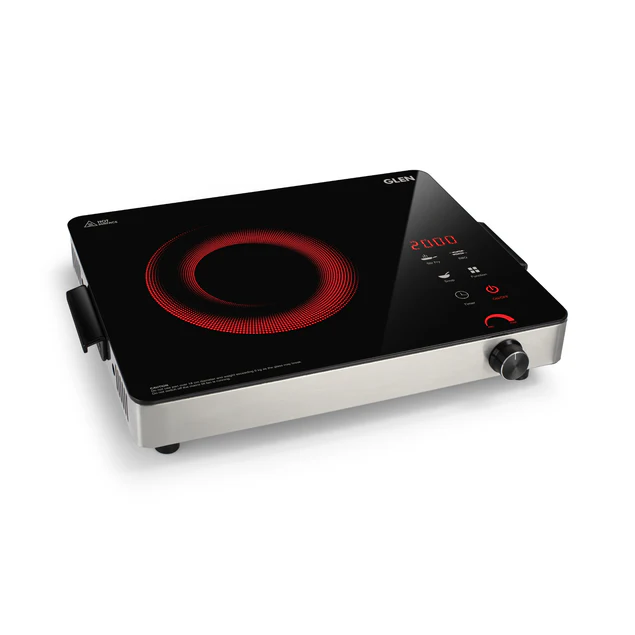
Warranty cards get thrown in a drawer and forgotten within a month of purchase, usually right after the first big meal is cooked. That’s normal. However, there is one thing customers often fail to notice in year three: the warranty period and the lifespan of a cooktop are two totally different concepts. Having a two-year warranty does not necessarily mean the appliance expires after two years; rather, the manufacturer ceases to provide warranty coverage after two years. It means the manufacturer stops covering repairs on day 731. What happens after that depends almost entirely on how the cooktop was treated before that. Anyone currently weighing induction stove price tags across brands should know this up front: the cheapest unit on paper isn’t always the cheapest to own over a decade. Price and durability rarely move in exactly the same direction.
Warranty Coverage Doesn’t Equal Longevity
Manufacturing defects get covered. Burnt-on masala stains, mismatched cookware, and a kitchen socket shared with a mixer grinder do not. But once the window expires, all repair costs become the owner’s responsibility, and induction repair is not inexpensive, as a new coil or control board can cost about one-third of the equipment’s price.
Internal components like coils, sensors, and control boards typically deteriorate gradually due to long-term wear rather than failing abruptly. Instead, they deteriorate gradually, and the coil that has been overheating for the past two years due to improperly placed pans will finally fail without ever sending any warning. It will stop functioning only after long-term damage has already been done.
Little Things Add Up Over Time
Clean The Surface Every Time You Cook
Splashed oil and spilled dal on the glass surface are not just unsightly. When heated repeatedly, they form a film that reduces heat transfer efficiency to the pan. And, after the surface has cooled, cleaning it with a moistened rag becomes unnecessary. But missing a few days of cleaning during a festive period, when the stove is used three or four times a day, is when the damage usually starts.
Match the Cookware to the Machine
Induction only works with flat-bottomed, magnetic cookware, and this isn’t a minor technicality. A slightly warped kadhai or an old aluminium pan without a magnetic base forces the coil to strain while trying to detect proper contact. That extra effort generates heat inside the unit that has nowhere productive to go. Before adding new pots and pans to the kitchen, run a quick magnet test on the base; it takes 10 seconds and saves years of wear. If the magnet doesn’t stick firmly, the pan stays out of the kitchen.
Give It Its Own Socket
Plugging an induction stove into the same circuit breaker as a fridge or even a washing machine causes a power drop. Induction stoves consume a large amount of electricity. In fact, they can draw 1,800 to 2,000 watts at maximum capacity, which means a separate earthed circuit is not just good but absolutely necessary.
Maintenance That Is Properly Done
- Check the vents. Dust collects fast in Indian kitchens, especially near the stove. Blocked vents trap heat inside the unit, and trapped heat is the enemy of every electronic component in there.
- Dry the surface before switching on. Water pooling around the control panel, even a few drops, can confuse the touch sensors or, worse, seep into the wiring.
- Don’t stack heavy vessels on a cold cooktop. The glass is tough, not indestructible. Pressure combined with repeated heating and cooling cycles is a slow path to hairline cracks.
- Get a technician to look at it once a year, especially after the two- or three-year mark, before small coil issues become full replacements.
- Take error codes seriously. A cooktop flashing the same code repeatedly is trying to say something. Resetting it and moving on without checking usually costs more later.
Early Signs Something’s Off
A cooktop rarely fails without warning. The warnings just get ignored. Watch for a faint buzzing sound during use, uneven heating where one side of the pan cooks faster than the other, sudden shutoffs mid-cooking, or fine discoloration spreading across the glass. None of these means the cooktop is finished. They mean it needs attention now, not in three months. Catching any of these early, rather than pushing through until the unit dies completely, is often the difference between a small repair and buying a replacement altogether.
Power Supply Problems Are More Common Than People Think
Voltage swings during peak summer, when every household in the building runs an AC simultaneously, are a real threat to control boards. A stabilizer built for kitchen appliances, not a generic one, is worth the extra cost. And during the monsoon, keeping the unit away from open windows or the kitchen sink reduces moisture-related corrosion, which is harder to spot until it’s already caused damage, since it usually starts on the underside of the unit where nobody checks.
Dust and humidity work quietly. A weekly five-minute wipe-down of the unit and the counter around it prevents most of this from happening. It’s not glamorous advice, but it works.
Buying Smart Sets the Foundation
Longevity isn’t only about post-purchase habits. The journey begins with what is ultimately purchased. One needs to consider not only the cost but also the quality of the coil and the material used to manufacture it, as well as the proximity of service centers to the buyer, when thinking about whether to buy induction cooktop models. The availability of spare parts and nearby service centers makes a unit much more manageable and reliable over time, which becomes obvious only after the appliance breaks down and there are no nearby service centers.
Conclusion
Extending the life of your induction cooktop for several more years is not a matter of luck or an expensive AMC service. Rather, it comes down to performing some routine tasks: using proper cookware, cleaning the cooking area, plugging the cooktop into a specific socket, and being attentive whenever something seems wrong. When comparing induction stove prices, consider after-sales support, as it affects long-term maintenance ease. Glen Appliances is known in India as a producer of appliances designed for heavy and everyday use. Whether the cooktop in question is from Glen Appliances or another brand, the habits above are what actually determine whether it’s still working strongly five years from now.