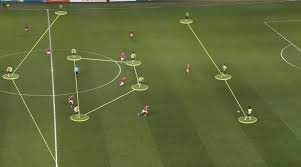

Understanding tactics and systems of play is one of the most important skills in modern football analysis. Whether you are a supporter trying to decode your team’s strengths, a bettor interpreting how strategies influence match outcomes, or a student of the sport seeking deeper insight, tactical analysis offers a structured framework for predicting how a game will unfold. Modern football has evolved beyond simple formations; it now demands a grasp of dynamic movements, phase-based behaviors, player roles, pressing structures, and opponent-dependent adjustments.
Analyzing tactics requires recognizing how teams control space, manipulate tempo, and structure their approach in both offensive and defensive phases. These tactical decisions directly influence match outcomes because they shape chance creation, defensive solidity, transitions, and patterns of play. Before exploring these elements in detail, the first step is defining what tactical concepts and systems of play truly represent.
Understanding Tactical Concepts and Systems of Play
Tactical concepts are the intentional behaviors and patterns a team employs to gain a strategic advantage. Systems of play refer to the structured formations and frameworks that guide how players position themselves across the pitch. These systems determine spacing, vertical lines between units, width, depth, and the relationships between defensive, midfield, and attacking players.
A system of play is more than a formation; it is a blueprint for orchestrating movements, covering zones, and distributing roles. Understanding the difference between nominal formation and actual tactical behavior is critical. For example, two teams using a 4-3-3 may execute completely different tactics depending on pressing triggers, midfield structures, and fullback behavior.
Once the conceptual foundation is set, the next step is examining the most common formations used in modern football.
Common Football Formations and Their Core Principles
Football formations form the skeleton of any tactical system. They reflect the team’s initial shape and provide insight into how players will interact vertically and horizontally. Popular formations include the 4-3-3, 4-2-3-1, 3-5-2, 3-4-3, and 4-4-2 diamond. Each structure presents distinct strengths and weaknesses, defined by spacing, pressure points, and balance across the pitch.
The 4-3-3 emphasizes width and pressing intensity. The 4-2-3-1 provides central stability with a playmaking “10.” The 3-5-2 favors compactness and wingback-driven width, while the 3-4-3 supports aggressive attacking overloads. Understanding these formations enables analysts to assess how teams match up against opponents and predict how structure affects game flow.
Strengths and Weaknesses of Popular Formations
Each formation comes with inherent tactical trade-offs:
4-3-3
Strengths: high pressing, wide overloads, fluid positional play.
Weaknesses: vulnerable to counterattacks if fullbacks push high.
4-2-3-1
Strengths: double pivot stability, creative midfield link.
Weaknesses: demands high stamina from wingers during transitions.
3-5-2
Strengths: defensive solidity, strong central presence.
Weaknesses: requires exceptional wingbacks to maintain width.
3-4-3
Strengths: aggressive attacking patterns, pressing triangles.
Weaknesses: midfield can be overloaded against strong central teams.
These strengths and weaknesses set the stage for exploring how defensive organization and pressing structures shape tactical outcomes.
Pressing Structures and Defensive Organization
Defensive organization determines how effectively a team controls space and prevents the opponent from progressing. Pressing structures guide when and where pressure is applied, influencing match tempo and territorial control. Teams choose between high press, mid block, and low block depending on their philosophy and the match context.
A high press aims to win the ball near the opponent’s penalty area, requiring coordinated movements from attacking and midfield units. A mid block prioritizes compact central space while allowing controlled opposition possession. A low block sacrifices territorial advantage to protect defensive zones and force low-probability shots.
High Press vs Mid Block vs Low Block
To understand pressing behavior, analysts explore a step-based comparison:
- High Press – Maximum pressure in advanced zones; ideal for athletic, cohesive squads.
- Mid Block – Balanced structure; denies central access and funnels the opponent wide.
- Low Block – Deep compact shape; relies on counterattacking opportunities.
Recognizing pressing patterns helps explain why some teams dominate possession while others wait for turnover moments. This connects naturally to attacking principles.
Attacking Patterns and Chance Creation Models
Attacking patterns reveal how teams create chances through coordinated movements. Modern football emphasizes positional play, verticality, third-man combinations, overloads, and dynamic rotations. Attacking tactics vary based on formation and philosophy but share the goal of manipulating defenses to generate high-quality scoring opportunities.
Wide combinations create crossing zones. Central overloads disorganize defensive blocks. Third-man runs break lines by using decoy movements. Some teams rely on possession, while others prefer direct transitions. Understanding these behaviors leads directly into analyzing how teams transition between phases.
Transition Phases and Game Rhythm Control
Transitions are some of the most critical tactical moments in football. They occur immediately after possession is gained or lost, and they often determine match outcomes because defenses are most vulnerable during structural shifts. Positive transitions (counterattacks) rely on speed and verticality, while negative transitions require instant reorganization.
Teams that dominate transitions typically control match rhythm. A possession team may slow the tempo to maintain structure, while counterattacking teams speed up play to exploit disorganization. Analyzing transitions reveals how tactical identity shapes game flow and supports predictions about match momentum.
Player Roles and Positional Responsibilities in Modern Systems
Individual roles bring tactical concepts to life. Modern football roles have become increasingly specialized: inverted fullbacks, false nines, advanced registas, half-spaces playmakers, overlapping center-backs, and hybrid midfield-destroyers. These roles combine positional awareness, tactical intelligence, and dynamic movement.
Understanding roles clarifies how formations operate. For instance, inverted fullbacks influence central overloads, while false nines disrupt defensive marking schemes. Registas dictate tempo and dictate vertical rhythm. Player roles often change depending on opponent analysis, linking directly to adaptability.
Tactical Adaptation Based on Opponent Analysis
Tactical flexibility requires teams to adjust role responsibilities based on opponent strengths. Analysts examine:
- Opponent’s defensive block type
- Key creators or ball-progressors
- Vulnerable spaces in structure
- Preferred transitional behavior
- Pressing triggers and weaknesses
These adjustments link seamlessly into the impact of external conditions.
External Factors That Influence Tactical Decisions
External factors significantly influence tactical planning. Pitch conditions, weather variations, altitude, travel fatigue, and competition stakes shape how teams execute their strategies. A slow pitch may favor compact defensive structures over quick passing systems. Wind can disrupt long-ball strategies. Rain may slow tempo and reduce pressing intensity.
These external influences help analysts anticipate tactical adaptations—a key step before incorporating data models for deeper evaluation.
Using Data and Statistical Models to Analyze Tactics
Modern tactical analysis incorporates data-driven approaches such as expected threat (xT), possession value models, pressing efficiency, heatmaps, and event data. These models quantify tactical behaviors and identify patterns invisible to the naked eye.
Analysts use xT maps to evaluate which zones create progression value. Pressing metrics show how effectively teams apply pressure. Heatmaps reveal positioning tendencies. These tools support prediction frameworks and advanced tactical evaluation.
Integrating Tactical Metrics with Match Predictions
Predictive analysis integrates tactical insights using a systematic sequence:
- Evaluate formation and structural tendencies
- Measure pressing and defensive behavior
- Analyze chance creation patterns
- Incorporate xG/xT values
- Adjust predictions based on roles, transitions, and opponent matchups
This structured method helps analysts generate accurate forecasts while avoiding common interpretive mistakes.
Common Mistakes When Analyzing Football Tactics
Tactical analysis is prone to errors, especially when viewers focus exclusively on formations without considering dynamic movement. Another mistake is misinterpreting pressing intensity or overestimating possession value. Analysts often neglect contextual factors such as pitch quality or fatigue.
Ignoring opponent influence leads to inaccurate conclusions—tactics always exist in relation to the opposition. Avoiding these pitfalls improves accuracy and analytical reliability.
Strategies to Improve Tactical Analysis Skills
Improving tactical understanding requires consistent learning and observation. Analysts can enhance their skillset through structured approaches:
- Review match replays using slow motion
- Track role-specific movements
- Use multi-angle videos and event data overlays
- Study coaching interviews and tactical lectures
- Practice identifying pressing triggers and rotations
- Compare tactical behaviors across different leagues
These methods accelerate tactical literacy and improve match prediction accuracy. To conclude, the final section connects fans with broader football learning resources.
Related Football and Entertainment Insights
Tactical analysis enables fans to appreciate football at a deeper level. Understanding systems, strategies, and positional structures enriches match viewing and enhances prediction accuracy. Fans seeking more expert insights, statistical tools, and entertainment options can explore additional platforms offering tactical metrics and real-time analysis. One such platform is ufabet เว็บตรง, where football enthusiasts can discover a wide range of educational content, sports coverage, and interactive opportunities.
By engaging with tactical principles and learning how systems operate, readers can elevate their football knowledge and gain a competitive edge in understanding the sport’s strategic complexities.