
You pulled into your driveway after that storm last June and just stood there for a minute. The hood had at least thirty dents you could count from three feet away. The roof was worse. You ran your hand across the metal and felt every single one of them. That sick feeling in your stomach wasn’t about the car. It was about not knowing what comes next. How long will it take? How much will it cost? Will the insurance fight you on it?
Most people have never been through hail damage repair Arlington Heights style, where summer storms can roll through Palatine, Rolling Meadows, and Mount Prospect in back-to-back weeks and leave hundreds of cars looking like they’ve been pelted with golf balls.
Total Collision & PDR Hail Repair has been walking Arlington Heights drivers through this process for over 15 years. Their hail management crew has more than 20 years of combined experience, handling everything from the initial damage assessment to the insurance paperwork to the final quality check. Knowing what to expect at each step makes the whole thing a lot less stressful. Here’s how it actually works.
Step 1: Documenting the Damage Yourself
Before you call anyone, grab your phone. Walk around the car and take photos of every panel. Get wide shots showing the full vehicle and close-ups of individual dents. Shoot from different angles so the depth of the dents shows up on camera. Morning or late afternoon light works best because the shadows make the damage more visible.
Take pictures of any cracked glass, chipped paint, or damaged trim, too. Even if you think a dent is too small to matter, photograph it anyway. Your adjuster will want to see everything, and having your own set of photos protects you if there’s a disagreement later about what the storm actually did.
Step 2: Filing the Insurance Claim
Hail damage falls under your comprehensive coverage, not collision. If you carry comprehensive coverage on your policy, your insurer will pay for the repairs minus your deductible. If you don’t carry it, the full cost comes from your wallet.
File the claim the same day if you can. After a major hailstorm, adjusters get overwhelmed fast. The sooner you call, the sooner you can schedule an inspection. Most insurers now let you file online or through their app, which saves time.
Your insurance company will either send an adjuster to inspect the car in person or ask you to bring it to a drive-in claims center. The adjuster writes an initial estimate based on what they can see.
Illinois consistently ranks in the top five states for hail claims, and the Insurance Information Institute reported over 5,400 hail events nationwide in 2025 alone.
Step 3: Getting the Shop’s Assessment
A trained technician goes over every panel under controlled lighting and documents the full extent of the damage. They count dents, measure depth, check for paint cracks, and note any glass or trim damage the adjuster might have missed.
Total Collision & PDR Hail Repair does a thorough teardown inspection on every hail job. They check areas like door jambs, under trim pieces, and along body lines where dents are easy to overlook. If they find damage beyond what the insurance estimate covers, they submit a supplement to your insurer with photos and documentation.
Step 4: The Repair
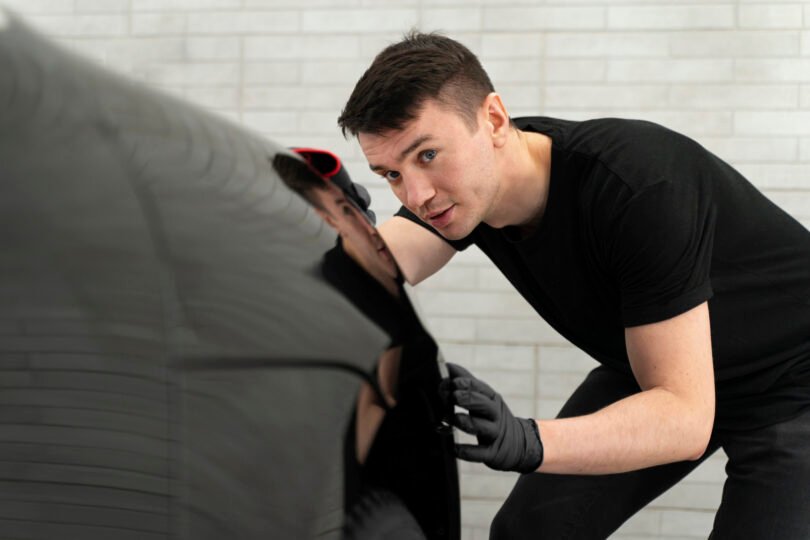
Once the estimate is finalized and approved, work starts. For most hail damage, the shop uses paintless dent removal. A PDR technician works from behind each panel with specialized metal tools, pushing the dented metal back into its original shape. No filler. No paint. No sanding.
PDR works on dents where the paint didn’t crack. That’s the majority of hail damage on newer cars with factory finishes. The process preserves your original paint, which helps keep the car’s value higher than it would be with a traditional body repair.
For dents where the paint has cracked or the metal has creased along a body line, conventional repair kicks in. The panel gets filled, sanded, primed, and repainted to match the factory color. Some panels get replaced entirely if the damage is bad enough.
Step 5: Quality Inspection before Pickup
Before you get the call to pick up your car, the shop should do a final walkaround. Every repaired panel gets checked under proper lighting for leftover dents, high spots, or paint imperfections. Total Collision & PDR Hail Repair runs this inspection on every vehicle before it leaves.
When you arrive, walk around the car yourself. Run your hand across the hood and roof. Look at the panels from different angles in natural light. A proper PDR repair should feel completely smooth, like the dents were never there. If something doesn’t look right, say so before you drive off.
What about Storm Chasers?
The National Insurance Crime Bureau warns that storm chasers show up after every major hail event. These are out-of-town crews that knock on doors, set up in hotel parking lots, and offer to fix your car fast for whatever insurance pays. Some do passable work. Many disappear before you notice the problems.
If something goes wrong six months later, you’ve got no one local to call. A shop that’s been on West Northwest Highway for years isn’t going anywhere. That’s the difference between hail damage repair Arlington Heights residents can trust and a gamble with a crew that’ll be in Indiana by next week.
The Cost
The average auto hail damage claim runs between $4,000 and $5,000, depending on severity. Light damage with a handful of dents might cost under $1,000. Heavy damage across all panels can push past $10,000, especially on vehicles with aluminum body panels or advanced safety systems that require recalibration after repair.
If you carry comprehensive coverage, your out-of-pocket cost is just your deductible. Most deductibles sit between $250 and $1,000. If the repair cost is close to your deductible amount, it might not be worth filing a claim.
Don’t sit on the damage. Cracked paint lets moisture in. Moisture causes rust. And rust turns a $2,000 PDR job into a $6,000 panel replacement by fall. Get the car assessed within the first week after the storm, file your claim early, and book your repair before the shop fills up for the season.