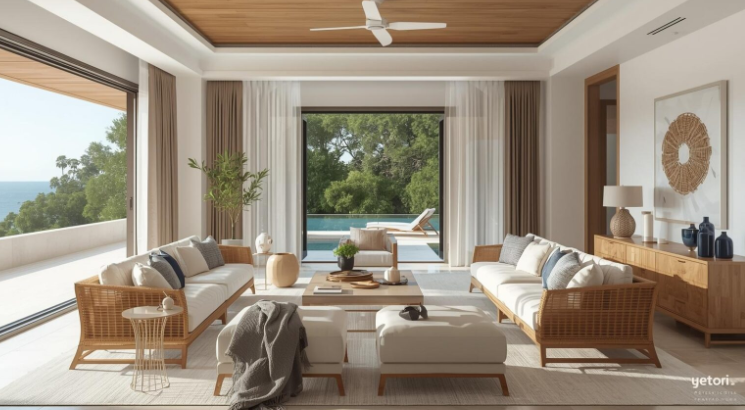

Living near the sea carries a particular kind of beauty. The smell of rain on warm earth, the rhythm of monsoon winds, and the soft light filtering through coastal canopies draw people to homes along this shoreline. Yet that same environment is quietly demanding. The conditions that make coastal living so appealing place extraordinary stress on a home’s interior fabric over time.
Homeowners across Mangalore and Udupi often discover this the hard way. A space that looks stunning on day one can begin showing wear within a year when materials are chosen without accounting for the local climate. Working with the best interior designer Mangalore has to offer means working with someone who treats the coast as an active variable in every design decision, not merely as a backdrop.
What the Coast Quietly Does to a Home Over Time
Salt Air and the Surfaces It Attacks: The air along Coastal Karnataka carries salt particles that settle invisibly on surfaces and work their way into finishes, hardware, and wood grain. Metals oxidise faster than expected in these conditions. Painted surfaces begin to bubble and peel even without direct water contact, and door fittings corrode at a rate that catches most homeowners off guard.
When Humidity Becomes the More Persistent Problem: The dampness problem in coastal homes is not limited to rainfall or visible water ingress. High humidity levels persist throughout the year, and poorly ventilated rooms accumulate moisture steadily. Wooden elements swell, warp, and eventually crack. Grout lines darken. Wall finishes lose adhesion. What begins as a cosmetic concern can, over a few seasons, become a structural problem requiring costly remediation.
Where Generic Interior Choices Quietly Fail
Why Inland Catalogues Do Not Travel Well: Many interior firms work from a standard palette of finishes and furniture that performs reliably in dry, inland environments. Applied to your coastal home, the same choices lead to predictable problems. The best interior design tips for coastal homes consistently point to one truth: material selection must begin with the site’s climate and microenvironment, not the colour palette or current trends.
What Homeowners Often Notice Too Late:
- Swelling door frames and cabinet shutters that stop closing properly after the first monsoon season.
- Hardware showing visible rust or discolouration within eighteen months of installation.
- Paint finishes that begin to peel or blister along walls exposed to prevailing coastal winds.
- Flooring grout that darkens or cracks due to persistent moisture absorption beneath the surface.
- Upholstery and curtain fabrics that develop musty odours despite regular cleaning and maintenance.
What a Proper Coastal Brief Actually Changes: When a designer understands the coastal brief, early decisions shift fundamentally. Timber species are specified for their natural oil content and dimensional stability. Metals are selected by grade, not just finish. Sealants and primers are matched to humidity exposure. These choices often add little to the project cost when made upfront, but they save considerably when remediation becomes the only alternative.
Choosing Materials That the Coastal Environment Can Respect
Timber That Holds Its Shape Over Seasons: Not all wood performs equally in humid conditions. Teak, with its natural oils, remains one of the most dependable choices for joinery and furniture in coastal settings. Marine-grade ply, sealed at every edge using proper bonding systems, significantly reduces moisture ingress. Designers who understand the coastal brief specify these materials as baseline requirements, not premium additions to a standard fit-out.
Hardware That Survives Prolonged Salt Exposure: Grade 316 stainless steel is far better suited to coastal environments than standard mild steel or lower-grade stainless fittings. Powder-coated finishes, when applied with correct surface preparation, offer durability that standard paint cannot match near the sea. These distinctions are rarely discussed in generic design conversations, but they are exactly what separates a home that ages gracefully from one that demands constant maintenance.
When Finish Systems Function as Design Tools: The right finish system does more than protect a surface. In a coastal home, it determines how long that surface holds its intended appearance. Exterior-grade coatings applied in internally exposed areas, anti-fungal primers beneath wall paints, and UV-resistant finishes in sun-facing rooms require deliberate specification at the design stage, not remedies applied only after damage begins to appear.
Ventilation as a Design Strategy, Not an Afterthought
Planning Airflow Before Planning Aesthetics: In coastal homes, good ventilation is not simply about thermal comfort. It functions as a moisture management tool. Rooms that breathe well stay drier, surfaces stay cleaner, and materials last significantly longer. Positioning openings to capture prevailing sea breezes, planned at the concept stage, reduces the reliance on mechanical air conditioning while protecting interior finishes naturally across every season.
Where Ventilation Planning Often Goes Wrong: Many homeowners, and even some designers, treat ventilation as a secondary consideration, addressed only after spatial layouts and furniture plans are finalised. By that point, walls are set, doors are positioned, and the opportunity to plan effective airflow has passed. Getting this right in a coastal home requires thinking about air movement at the concept stage, before the brief is locked in.
When Good Design Becomes the Most Practical Investment
A coastal home that ages well is not an accident. It is the result of decisions made with the environment in mind before a single material is selected. The difference between beauty that lasts and beauty that fades within years lies in specifications, sealants, and ventilation built into the design from day one. Reach out to a qualified interior design professional today to begin building your home in a way that truly endures.