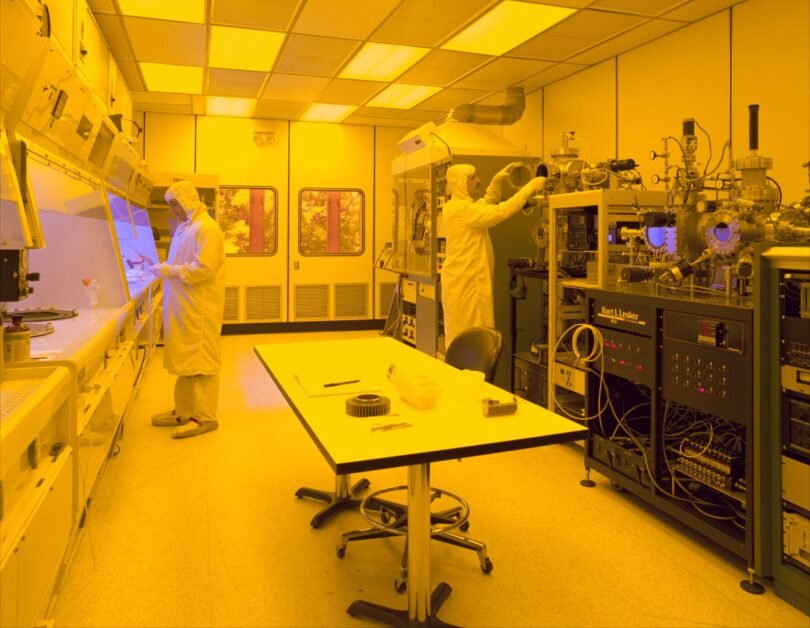

Japan’s plan to invest up to $21 billion in two GlobalFoundries factories in Malta, New York, is best read as a business transaction with geopolitical benefits attached. For the chipmaker, it funds expansion at its flagship American campus. For Japanese industry, it secures orders and influence. For investors watching the semiconductor cycle, it is further evidence that government money has become a permanent feature of the industry’s economics.
The numbers deserve context. A single advanced fab can cost upwards of $10 billion to build and equip, so $21 billion for two plants is in line with current industry pricing rather than an extravagant outlier. What is new is the structure: allied state capital, deployed deliberately to lock in supply relationships for decades.
Revenue logic for GlobalFoundries
GlobalFoundries occupies a distinctive position among chipmakers. It exited the race for the smallest transistors years ago and instead sells capacity in mature and specialised processes — the chips that sense, connect, display and manage power. Its customer base, profiled on GlobalFoundries’ website, spans carmakers’ suppliers, industrial groups and communications firms that value long product lives and dependable supply over raw speed.
That model rewards exactly what Malta offers: an established site, an experienced workforce and room to grow. Automotive and industrial customers sign long-term agreements to secure capacity, and additional fabs convert those agreements into utilisation. Japanese co-investment lowers the capital risk of building ahead of that demand.
Industrial policy as market force
The CHIPS and Science Act changed the industry’s maths by offering roughly $52 billion in US incentives, with research and standards coordination through agencies such as the National Institute of Standards and Technology. Japan’s government has moved similarly, and the two programmes increasingly interlock: subsidies in one country de-risk investments by firms from the other.
The commercial consequences are already visible in valuations and order books across the equipment sector. Every new fab is a multi-year order stream for toolmakers, materials suppliers and construction firms, many of them Japanese. Tokyo’s $21 billion, viewed coldly, is partly an export programme for its own industrial champions — one that happens to build factories in New York.
Reading the deal like an investor
For portfolio watchers, three features of the transaction stand out. First, duration: semiconductor co-investments of this type are structured over a decade or more, which smooths the industry cycle that has historically whipsawed smaller suppliers. Second, customer anchoring: capacity in Malta serves sectors — automotive, industrial, communications — where buyers sign multi-year agreements and rarely switch foundries casually, supporting utilisation through downturns. Third, policy alignment: when two governments have capital and credibility committed to a site, permits, infrastructure and workforce programmes tend to move at a different speed.
None of that eliminates execution risk, and investors will price the usual hazards of construction cost and equipment delivery. But the structure explains why the announcement was received as strategically significant rather than merely large. It is the financing model of the new chip era in a single transaction: private capacity, allied capital, guaranteed demand.
Risks and the regional dividend
The risks are equally concrete. Fabs are exposed to construction inflation, tool delivery schedules and a tight market for experienced process engineers; the industry’s history includes delayed and downsized projects in several countries. Demand cycles also cut both ways, and capacity ordered in a shortage can arrive in a glut. Management’s task will be staging the two plants so output meets contracted demand rather than hope.
Regionally, however, the dividend is straightforward: construction employment, permanent technical roles and a deeper supplier base in the Capital Region, compounding an existing cluster around Fab 8 — a pattern our business coverage has tracked before in this recent article. For a state that has courted semiconductor investment for twenty years, Japan’s cheque is validation. The wider lesson for boards is that site selection is now strategy: where a factory sits, and whose government stands behind it, shapes its economics as surely as the chips it makes. See also this related explainer.