
Everyone aged 50 to 74 in England is now offered a home test for bowel cancer, after the NHS completed the expansion of its screening programme in March 2025. People aged 50 and 52 began receiving the faecal immunochemical test, or FIT, automatically by post, completing a phased rollout that began in 2021, when screening was offered only to people aged 60 and over. Around 850,000 more people a year are now eligible, and more than four million extra people have been invited since the expansion began. The test looks for tiny traces of blood in a small stool sample, which can be an early sign of bowel cancer, and it is done at home every two years. Bowel cancer is the fourth most common cancer in Britain, with around 44,000 people diagnosed each year, and it is highly treatable when caught early: more than nine in ten people survive for five years or more when the disease is found at its earliest stage, compared with about one in ten when it is found late. Screening can also prevent cancer, because it finds polyps, small growths that can be removed before they turn cancerous.
What the Evidence Shows
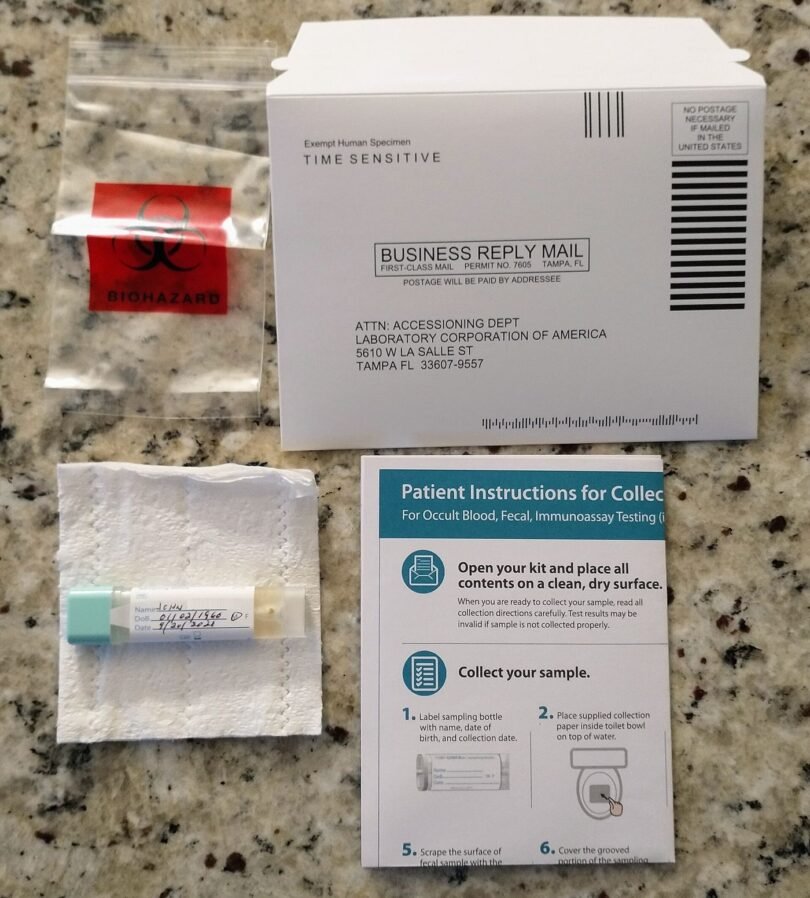
The test itself is simple and takes a few minutes: a small stick collects a sample, which is sealed in a tube and posted back in a prepaid envelope, and most people get a normal result within two weeks. About two in every hundred tests come back abnormal, which does not mean cancer, but leads to a hospital appointment for a colonoscopy, a camera examination of the bowel. Uptake is the challenge: only about seven in ten people invited return the test, and rates are lower in deprived areas and among some ethnic groups, which is why the NHS is working with community groups to raise awareness. Anyone who receives a kit should use it, and anyone with symptoms such as blood in the stool, a persistent change in bowel habit or unexplained weight loss should see a doctor straight away, whatever their age. Reporting and analysis from sources such as The Lancet track the same developments, and specialists following bowel cancer screening say the direction is now consistent across independent lines of evidence.
The Wider Context
Equity runs through every discussion of bowel cancer screening. Interventions that require apps, fees or free weekday afternoons reliably reach the people who need them least, so the programmes earning praise are those designed around clinics, workplaces and community venues that already serve everyone. Evaluation reports now publish uptake by income and region as a matter of routine.
What Happens Next
The practical takeaway on bowel cancer screening is deliberately unglamorous: it works best as part of ordinary, well-delivered care rather than as a standalone fix. Health services are planning on that basis, building the referral routes and follow-up that turn a promising result into population benefit. The gains arrive slowly and then, in the statistics, unmistakably. You can follow related developments in our coverage of health.
It is also worth remembering how quickly the picture in this area has changed before. Positions that looked settled a few years ago have been revised as new data arrived, and the same humility is appropriate now. The strongest coverage of this subject, and the most useful advice, tends to come from sources that update their views openly when the facts move, rather than defending an earlier position long after it has stopped fitting the evidence available.