
Automated food retail can turn an underused area into a useful amenity and a measurable commercial channel—but only when the property owner validates demand, infrastructure, responsibilities, and service standards before installation.
By VendoPizza Editorial Team
Property owners face a recurring service problem: customers, tenants, employees, students, patients, or travellers want food beyond the hours when a staffed outlet is economical. Extending cafeteria hours can require additional labour, management, utilities, and compliance. Installing a full kitchen can demand even more capital and space.
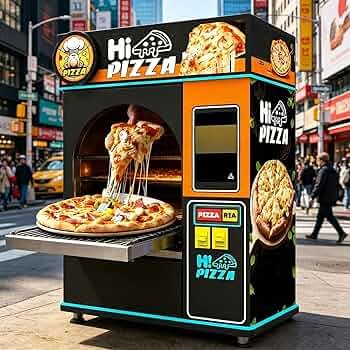
Automated hot-food retail offers a different option. A properly planned pizza vending machine can provide a complete hot meal through a compact self-service format, accept cashless payments, and trade during evenings, weekends, or overnight periods. The European Vending & Coffee Service Association reported five million machines across Europe, €26.4 billion in annual product revenue, and cashless systems on 85% of the pay-vend machine base in its report covering the market through the end of 2024. EVA market report summary.
Those figures show that unattended retail is already familiar to European consumers. They do not mean that every hot-food machine will succeed. For a property owner, the opportunity is not simply to place equipment in an empty corner. It is to create a managed service with clear demand, reliable access, disciplined food handling, responsive support, and a commercial agreement that protects the site.
The following framework helps landlords, facility managers, hotel operators, universities, hospitals, industrial sites, transport locations, and residential developments evaluate the opportunity before committing space or capital.
1. Start With the Meal Gap, Not the Machine
A site can have thousands of visitors and still be a poor location if convenient food alternatives remain open throughout the day. The strongest opportunity usually appears when people are present but a specific meal occasion is underserved.
Walk the property during the hours the service is expected to matter. A midday inspection may miss the night-shift demand in a hospital, the late-study period on a campus, the evening arrivals at a hotel, or the short break window in a logistics centre.
Build a simple demand map with four questions:
• Who needs food at this location?
• At which hours are existing alternatives closed, slow, distant, or unsuitable?
• How long can customers reasonably wait?
• What volume is repeatable after the novelty of launch week disappears?
2. Choose the Commercial Model Before Negotiating the Site
Property owners can participate in automated food retail in several ways. The correct model depends on how much operational control, risk, and potential return the organisation wants.
| Model | Property owner role | Potential benefit | Main watch-out |
| Fixed rent | Provides space and agreed utilities/access | Predictable site income | May discourage the operator if early demand is uncertain |
| Revenue share | Shares a percentage of defined sales | Aligned upside with lower entry barrier | Requires clear reporting and revenue definitions |
| Managed amenity | Pays or subsidises the service for users | Supports tenant, staff, or guest experience | Value must be measured beyond direct rent |
| Owner-operated | Buys and runs the equipment | Greater control and full operating upside | Also assumes food, service, staffing, and maintenance risk |
A pilot often works best when both sides share enough risk to remain engaged. The property owner contributes a serviceable location and practical access; the operator contributes equipment, food operations, maintenance, monitoring, and customer support. The contract should make that division explicit.
3. Evaluate the Business Case From the Property Side
The machine operator will calculate product margin and route economics. The property owner should evaluate a different but connected set of benefits and costs.
Potential benefits can include rental or revenue-share income, stronger after-hours amenities, improved employee or resident convenience, less pressure on staffed catering, and better use of a low-productivity area. Costs may include electricity, installation work, cleaning boundaries, security, administrative time, and disruption when service visits are poorly planned.
Before approving the project, estimate:
• Expected transactions by daypart rather than one daily average
• The property’s direct income under the proposed rent or revenue-share model
• Utility and site-preparation costs
• Any subsidy or minimum guarantee
• The value of the amenity to the property’s users
• The operational burden created by access, incidents, complaints, and servicing
A machine should not be approved simply because it appears innovative. It should solve a real service problem while fitting the property’s operational and financial priorities.
4. Audit the Exact Installation Point
The commercial case can be strong while the chosen position is technically unsuitable. The audit must cover the exact point where the unit will stand, not only the building in general.
Visibility and customer flow
Customers should see the machine before they make another food decision. There must be enough space to read the menu, order, pay, and wait without blocking an entrance, emergency route, reception queue, or busy corridor.
Power and operating environment
Confirm the exact model’s electrical requirements, heat management, service clearances, floor condition, ambient temperature range, weather protection, and any ventilation or drainage needs. Indoor suitability should not be assumed to cover outdoor or semi-outdoor placement.
Delivery and service access
Trace the route from the service vehicle to the machine. Check loading access, doors, lifts, corners, stairs, security procedures, and permitted service hours. Replenishment that looks easy on a floor plan may be slow in daily operation.
Connectivity and payments
Test cellular or network connectivity at the final position, including during busy periods. Confirm that the payment terminal supports the market, currency, and payment methods used by the intended customers.
Safety and accessibility
Review lighting, surveillance, slip and trip risks, customer approach space, accessibility requirements, and the effect of queues during peak periods.
5. Complete Due Diligence on the Equipment and Operator
“Pizza vending machine” describes a category, not one standard product. Systems may prepare dough or core ingredients inside the unit, store refrigerated prepared pizzas for baking after purchase, or use chilled or frozen stock-and-bake workflows. Each format affects food preparation, storage, cleaning, replenishment, capacity, and staffing.
Property owners do not need to become vending engineers, but they should require model-specific answers. VendoPizza’s automated food retail guide provides a practical overview of self-service food formats, deployment steps, machine categories, and European reference points for buyers comparing projects.
Request written confirmation of:
• Exact model code and food-production workflow
• Footprint, weight, service clearances, and delivery dimensions
• Electrical and environmental requirements
• Capacity, typical serving cycle, and restocking method
• Payment hardware, connectivity, and remote-monitoring features
• Available technical, conformity, installation, and operating documents
• Warranty scope, exclusions, service response, and spare-parts process
• Who owns the machine, payment account, transaction data, and customer-support responsibility
Avoid making decisions from a generic brochure or an unverified capacity claim. The final review should match the exact machine configuration, destination, installation environment, and written commercial terms.
6. Create a Food-Safety Responsibility Matrix
An unattended point of sale is still part of a managed food operation. In the European Union, food business operators carry primary responsibility for food safety, and hygiene rules emphasise cold-chain control and procedures based on HACCP principles. The applicable obligations depend on the country, product workflow, and local authority. Regulation (EC) No 852/2004 provides a central EU reference point.
The property owner and operator should document who is responsible for each operational task:
| Task | Named owner | Required evidence or response |
| Product receiving and loading | Operator / food business | Delivery checks, dates, rotation, approved products |
| Temperature monitoring | Operator | Logs, alert ownership, escalation procedure |
| Cleaning and sanitation | Defined party | Schedule, checklist, records, waste removal |
| Allergen and product information | Operator / food business | Accurate menu and legally required customer information |
| Power or refrigeration incident | Both parties | Contact route, sales suspension, product assessment |
| Customer complaint or refund | Operator | Visible support channel and response process |
Food information must also be accurate and accessible. Regulation (EU) No 1169/2011 establishes general responsibilities for food information to consumers, while national requirements can add detail. The operator should confirm the rules for the intended market before launch.
7. Design the Customer Experience Around Trust
Customers will judge the property as well as the operator when a machine is dirty, unavailable, confusing, or difficult to use. A self-service format should reduce friction, not transfer every problem to the customer.
Before launch, review the experience from several metres away and then complete a real purchase. Confirm that customers can understand:
• What the machine sells and whether the food is served hot
• Available products, prices, ingredients, and allergen information
• Accepted payment methods and the expected preparation time
• Where the pizza is collected and whether packaging is included
• How to obtain help or request a refund
Lighting, cleanliness, screen readability, language options, branding, noise, waste bins, and queue space can all affect adoption. The machine may be unattended, but the experience should never feel unmanaged.
8. Put the Operating Rules Into the Contract
A vague agreement creates friction precisely when the service needs a fast response. The pilot contract should define the commercial model and the operating rules in the same document or in linked schedules.
Include clear terms for:
• Pilot start and end dates, renewal, relocation, and termination rights
• Fixed rent, revenue share, minimum guarantee, or subsidy
• How gross sales, refunds, taxes, and processing fees are treated
• Responsibility for utilities, site preparation, permits, installation, and removal
• Access hours for replenishment, cleaning, and technicians
• Uptime expectations and incident escalation
• Security, vandalism, insurance, surveillance, and liability
• Branding, signage, promotions, and customer communications
• Performance reporting and access to agreed sales or service data
The contract should also identify what happens after repeated downtime, persistent stock-outs, complaints, or poor sales. A defined remedy is easier to manage than an argument after the problem occurs.
9. Measure the Pilot With a Balanced Scorecard
Opening-week attention can create a temporary sales spike. A useful pilot measures repeatable performance across enough normal operating days to reveal demand, reliability, service effort, and customer acceptance.
| Area | Measure | Decision question |
| Demand | Transactions by hour and day | Does the machine solve the intended meal gap? |
| Availability | Uptime, payment success, stock-outs | Can customers buy when demand occurs? |
| Operations | Service visits and time on site | Is the location practical to support? |
| Product | Sell-through, waste, refunds | Is the menu forecastable and acceptable? |
| Customer | Complaints, repeat signals, feedback | Does the service build trust? |
| Property | Income, utility cost, incident burden | Does the amenity create net value for the site? |
At the review date, choose a clear action: continue, optimise, renegotiate, relocate, or stop. A pilot succeeds when it produces evidence for the next decision, even when that evidence shows that the original location should not continue.
10. Scale a Service Network, Not a Collection of Machines
A portfolio rollout should follow operating evidence. Several well-chosen properties in one service area may be easier to support than the same number spread across distant regions. Route density reduces travel, simplifies replenishment, improves technician response, and makes spare-parts planning more practical.
Standardise the elements that should be repeatable: site-audit questions, technical approvals, contract clauses, menu data, food-safety records, alert ownership, refund handling, and monthly reporting. Leave room for local differences in demand, price, product mix, and access.
The strongest expansion plan is not “install more machines.” It is “repeat a proven service model in properties with the same demand and operating conditions.”
A Compact Footprint Still Requires Serious Management
Automated pizza retail can help a property offer 24/7 hot food without building or staffing a traditional kitchen. It can also create rent, revenue share, or amenity value from space that previously generated little benefit.
The format succeeds when the property owner and operator treat it as a complete service. Demand must be specific. The installation point must be technically ready. Food safety, cleaning, payments, alerts, refunds, and maintenance need named owners. The contract must allocate risk. The pilot must be measured honestly.
The machine is compact. The management discipline behind it should not be.
Frequently Asked Questions
Can a property offer hot food without running a kitchen?
Yes. A managed automated-food installation can provide hot meals without a staffed counter or full on-site kitchen. The operator still needs compliant food preparation, storage, replenishment, cleaning, monitoring, and service processes.
Which properties are best suited to pizza vending?
Sites with a clear after-hours or time-constrained meal gap are strongest. Examples can include hospitals, universities, factories, hotels, transport locations, residential developments, offices, and roadside properties, subject to local demand and site readiness.
Should a property owner charge fixed rent or use revenue share?
There is no universal best model. Fixed rent offers predictability; revenue share aligns both parties with sales; a managed amenity may prioritise user experience; owner operation provides control but adds operational risk. Pilot economics should guide the choice.
Who is responsible for food safety?
The parties must identify the relevant food business operator and allocate every task clearly. Responsibilities normally cover product handling, cold-chain control, cleaning, allergen information, monitoring, incident response, and records. Local professional advice should confirm the exact obligations.
How long should a pilot run?
The pilot should cover enough normal operating days to test weekday, weekend, and relevant seasonal patterns. Define the review date and success criteria before launch rather than deciding after seeing the first sales results.
Author Biography
VendoPizza Editorial Team publishes practical guidance on automated food retail, pizza-vending formats, site planning, food safety, and European deployment. VendoPizza helps commercial buyers compare machine configurations, review location and operating requirements, and obtain destination-specific quotations for intended installations.