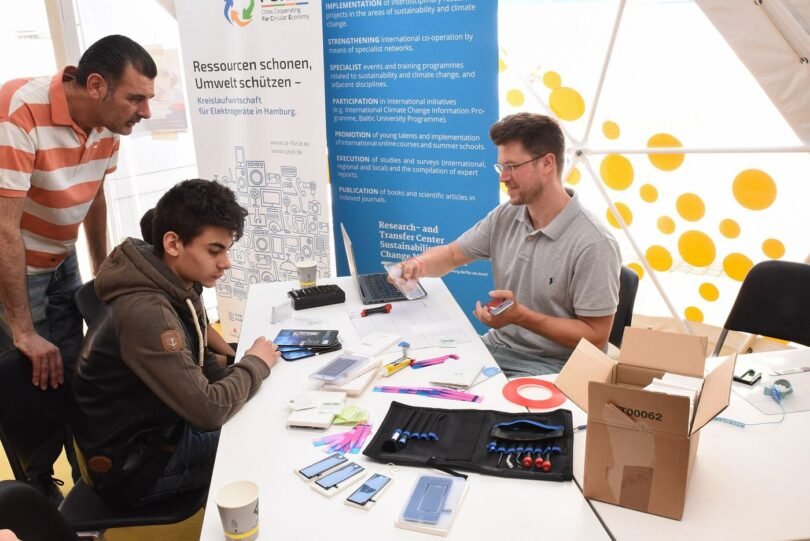

Walk into any busy phone repair shop and you will see benches crowded with screens, batteries and heat guns. What you will not see, but what quietly decides how fast the whole operation moves, is the state of the workshop’s computers, and in particular whether their phone drivers are installed, current and consistent. In the repair trade, software plumbing is not a detail. It is half the job.
Time is the inventory
A repair business sells technician hours. When a MediaTek phone arrives with corrupted software, the fix itself might take fifteen minutes of flashing, but only after the PC recognises the handset. Shops that neglect driver maintenance lose those minutes repeatedly: hunting for packages, fighting signature prompts, swapping cables at random. Multiplied across a day of tickets, it is the difference between a bench that clears its queue and one that drowns in it.
Well-run workshops therefore treat a known-good MTK Driver installation as standard equipment, imaged onto every bench PC the same way. The version is recorded, the installer is kept on a local drive, and new staff are taught the connection routine, tool first, cable second, volume key held, as part of their first week.
Consistency beats improvisation
The same discipline applies to cables and ports. Each bench keeps tested data cables, replaced on a schedule rather than after a failure, and front-of-case USB ports are avoided in favour of motherboard connections. Resources like mtkdriver.org serve as the reference when a new chipset generation changes the routine, so the shop’s written procedure can be updated once and used by everyone.
The customer never sees it
Training is a system, not a favour
Shops feel the driver question most sharply when a new technician starts. Without a written routine, every starter develops private habits, and benches diverge until nobody can cover for anybody else. Documenting the standard setup, which package, which version, which port, which cable, turns scattered know-how into a business asset. It also makes quality auditable: if a flashed phone returns with problems, the manager can check whether the procedure was followed, rather than arguing from memory.
A lesson for small operators generally
There is a principle here that travels well beyond phone repair. In almost every service business, a handful of invisible dependencies, software versions, account credentials, calibration files, quietly gate the visible work. The operators who prosper are the ones who identify those gates and standardise them before they cause a public failure. MediaTek drivers are simply a very clear example: a free download, installed once, that decides whether skilled hands can do their work at all.
Customers, meanwhile, judge the shop on turnaround and honesty, never on infrastructure. Yet when owners compare notes, the profitable shops share the same trait: their invisible systems are boring, documented and identical on every bench. The driver story is a reminder that operational excellence is usually decided long before the customer walks in, in checklists nobody applauds and everybody depends on.
None of this is visible to the customer, who simply hands over a dead phone and collects a working one. That invisibility is exactly the point. In service businesses, reliability is built from unglamorous standardisation long before it shows up as reputation. The shops that thrive are rarely the ones with the fanciest tools; they are the ones whose computers recognise the phone the first time, every time. In repair, as in much of operations, the boring infrastructure is the business.
Related reading: Small-Business Credit Gets Pricier and Harder to Win