
International expansion rarely happens in one dramatic step. More often, a company acquires its first foreign customer, then another. It begins paying overseas contractors, appoints a distributor, opens a new sales channel and eventually discovers that what started as a domestic business now operates across several jurisdictions.
That is often the point at which founders begin reconsidering the corporate structure.
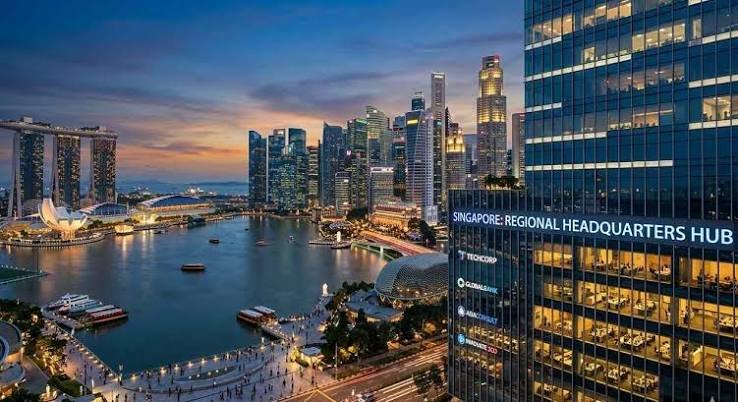
Singapore is one of the jurisdictions commonly evaluated for a regional company, particularly where the business has activities in Asia. The relevant question is not simply whether Singapore is business-friendly. It is whether establishing an entity there makes the international operation easier to manage.
The structure that worked at home may not scale internationally
A domestic company can usually handle occasional foreign sales. But as cross-border activity becomes material, the same structure may have to accommodate several currencies, international contracts, overseas suppliers and new compliance expectations.
A regional entity can separate international activity from the original domestic operation. Depending on the business, it might become the contracting entity for overseas customers, coordinate regional sales or hold specific commercial relationships.
Why businesses consider Singapore
Singapore combines a mature corporate system with a strategic Asian location. English-language corporate administration and a legal framework familiar to international businesses make it relatively straightforward for overseas stakeholders to understand how a Singapore company is organised.
Its role as a financial and commercial centre is also relevant to companies that need banking, payment and professional-service infrastructure capable of supporting international transactions.
Start with the commercial purpose, not the jurisdiction
A useful incorporation plan begins with a list of functions. Will the company invoice customers? Sign distributor agreements? Manage regional suppliers? Receive investment? Employ a regional team? Hold intellectual property?
Those answers should come before registering a company in Singapore. A clear operating purpose also helps when dealing with banks, payment providers and other institutions that need to understand the business.
Regional company does not mean moving the entire business
One misconception is that using Singapore requires relocating all operations there. In practice, international structures can be distributed.
For example, product development may remain in the home country while the Singapore company handles regional commercial activity. A trading business might continue sourcing from several countries while using Singapore for certain customer and supplier relationships.
The exact structure should reflect legal, tax and operational realities in every country involved.
Tax advantages need context
Singapore applies a 17% corporate income tax rate to chargeable income. Its tax system also provides exemptions for qualifying new start-up companies during their first three consecutive Years of Assessment.
But international taxation is rarely captured by one percentage. Management and control, the location of employees and operations, related-party transactions and the rules of other countries can all affect taxation.
This is why a commercially sensible structure is generally more durable than one created primarily around a headline tax rate.
Banking deserves early attention
A newly incorporated company does not automatically receive a bank account. When considering corporate bank account opening in Singapore, businesses should expect KYC questions concerning owners, activities, customers, suppliers and anticipated transactions.
For some companies a traditional bank is appropriate; for others, regulated payment institutions or a combination of providers may better match the transaction pattern. This should be assessed before incorporation rather than after the company already exists.
Ongoing compliance is part of the cost
Every Singapore company needs at least one director who meets local residency requirements and a company secretary, appointed within six months of registration. Companies also have accounting, annual filing and tax obligations.
Foreign founders therefore need to compare the expected commercial benefit of the structure against its recurring administrative cost.
Three situations where the case becomes stronger
First, the business has customers or partners across several countries and needs a consistent regional contracting entity. Second, it is actively expanding into Southeast Asia and needs a corporate base for regional operations. Third, international banking and payment requirements have become significant enough that the existing domestic setup is inefficient.
None of these automatically requires Singapore, but each creates a genuine reason to evaluate it.
A regional entity should solve a problem
The best corporate structures are usually easy to explain. There is a clear reason why each entity exists and a clear role it performs.
For a business moving from domestic operations to a multi-country model, Singapore can be an effective regional layer. The decision becomes much easier when founders begin not with ‘Where should we incorporate?’ but with ‘What do we need the new company to do?’