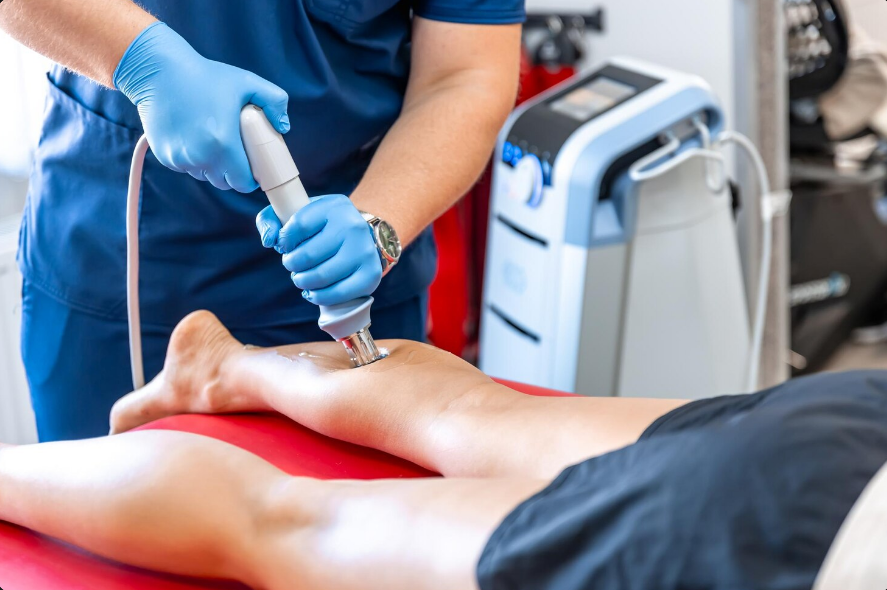
Shockwave therapy is one of those treatments that sounds dramatic from the name and turns out to be a lot more low-key in practice. The “shockwave” part isn’t electricity. What it actually is. An acoustic pressure wave delivered through a handheld device that looks vaguely like a heavy electric toothbrush. The waves travel a few centimeters into soft tissue and stimulate the body’s own healing response to chronic injuries that have stopped progressing on their own. Plantar fasciitis. Tennis elbow. Patellar tendinopathy. Achilles tendinopathy. Calcific shoulder tendinitis. These are conditions in which tissue is stuck in a chronic inflammatory cycle, and shockwave is one of the non-surgical interventions that can break that cycle.
The other thing patients should know going in is that shockwave isn’t a one-and-done deal. It’s a treatment course. Usually three to six sessions spaced about a week apart, with the actual cumulative effect compounding over the weeks following the final session. So anyone who tries one session, isn’t pain-free the next day, and stops is missing the point of how the protocol is supposed to work. The real response curve runs longer than any single visit, which makes expectation-setting half the battle. Patients considering shockwave therapy in Lombard before booking should have a clear picture of both the in-session experience and the longer arc of how the treatment unfolds over visits.
Lombard has several practices offering this work across the western suburbs. True Health Chiropractic and Acupuncture is one of the Lombard-area shockwave therapy providers running these sessions alongside chiropractic, acupuncture, and other rehab services. Nothing here recommends a specific practice. What’s ahead is a walkthrough of what initial sessions actually involve, what to expect during and after, and what a realistic recovery timeline looks like.
What Is Shockwave Therapy
The technical name is Extracorporeal Shockwave Therapy. ESWT. It delivers acoustic pressure waves to specific tissue by pressing a handheld applicator against the skin. Waves penetrate several centimeters into the tissue and generate mechanical effects that trigger the body’s healing response. There are two main types in use. Focused shockwave uses higher-energy waves to target a smaller, deeper area. Radial pressure wave (often called radial shockwave, even though technically it’s a different technology) sends lower-energy waves across a wider, shallower area.
A peer-reviewed review of shockwave therapy in musculoskeletal disorders walks through the FDA approval timeline. Proximal plantar fasciitis cleared in 2000. Lateral epicondylitis in 2002. Success rates across various conditions range from 65% to 91% in published studies. The actual mechanism isn’t fully nailed down. Still, the working theory involves stimulation of new blood vessel formation, induction of cellular healing responses, and breakdown of calcific deposits in certain tendinopathies.
Common Conditions Treated With Shockwave
The conditions in which the shockwave is used most often. Plantar fasciitis (the most common, with the strongest evidence base). Lateral epicondylitis, otherwise known as tennis elbow. Medial epicondylitis, golfer’s elbow. Achilles tendinopathy. Patellar tendinopathy, the jumper’s knee. Calcific tendinitis of the rotator cuff. Trochanteric bursitis at the hip. Other tendinopathies that haven’t responded to rest, stretching, anti-inflammatories, or physical therapy.
AAOS OrthoInfo’soverview of plantar fasciitis outlines the stepwise treatment progression that most clinicians follow. Conservative measures first. Stretching, ice, supportive shoes, anti-inflammatories. When those don’t resolve things after several months, shockwave moves into the conversation as one of the next-line interventions, before considering corticosteroid injections or surgery. The same general path applies to most of the other conditions on the list.
The Initial Consultation and Assessment
The first appointment is mostly an evaluation. Not treatment. The provider takes a history of the condition. How long has the pain been around? What treatments have already been tried? What activities make it worse? What activities make it better? Physical exam follows. Range of motion testing. Specific provocative tests for the suspected diagnosis. Palpation to identify exactly where the tenderness sits.
Some providers add imaging if it hasn’t already been done. Ultrasound is common for tendinopathies and plantar fasciitis. MRI for more complicated cases. The diagnosis matters because shockwave works better for some conditions than others, and ruling out structural problems (such as a tendon tear that requires surgical repair rather than conservative care) is important before starting a treatment course.
What the First Session Actually Feels Like
The session itself runs about 10-15 minutes for most areas. The patient is positioned to expose the treatment zone. The provider puts a layer of ultrasound gel on the skin. The applicator presses against the area and moves across it in a specific pattern based on the condition being treated.
How it feels is harder to describe, but generally tolerable. Most patients describe it as a rapid tapping or thumping pressure that ranges from mildly uncomfortable to genuinely painful, depending on the energy level set and the tissue’s sensitivity. Energy starts low and increases as the patient adjusts to it. Areas with active inflammation tend to be more uncomfortable than less inflamed ones. Discomfort stops the moment the applicator lifts off the skin.
Who Shouldn’t Get Shockwave Therapy
Some conditions rule out shockwave therapy. Pregnancy, especially over the abdomen or low back. Active malignancy in the treatment area. Bleeding disorders or anticoagulant therapy, depending on severity. Open wounds or active infections in the area being treated. Implanted devices like pacemakers or insulin pumps within the immediate treatment zone. Children with active growth plates near the proposed treatment site generally aren’t treated with focused shockwave.
A reputable provider screens for all of these before starting treatment. Patients with any uncertainty about whether their specific situation fits should raise it during the initial consultation, before any actual treatment is on the table.